martes, 31 de julio de 2007

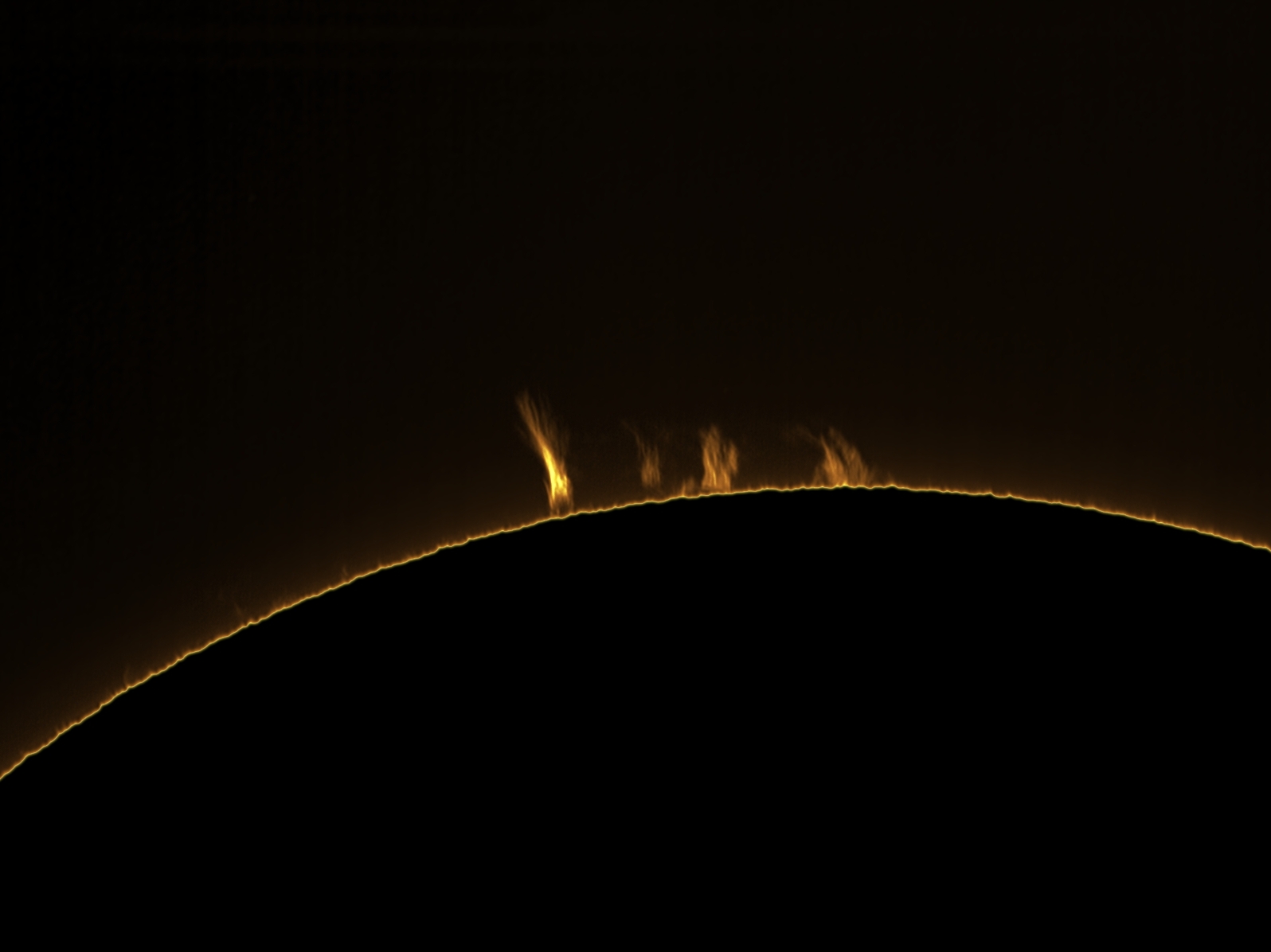
Solar prominence

If you blow up the picture you may think it's a bush fire over the hilltop and a nice flame to light your cigar with, but it's actually a bit different. You are looking at an image from the sun through a solar telescope and the flames on the edge are called prominences. Prominences are enormous clouds of hydrogen (which make up the bulk of the sun basically) held together by solar magnetic fields.

WARNING! DON'T TRY TO SEE THIS FOR YOURSELF BY LOOKING DIRECTLY INTO THE SUN, WITH OR WITHOUT TELESCOPE OR BINOCULARS! IF YOU DO YOU WILL GET BLIND!!

A day on the beach

The beach at Saint Martin. A small island in the Caribean. The runway is just after the beach. Imagine you are enjoying a nice sunny day to get a tan. And the take-off's are worse. Why? See the movie. Reason is jet blast. Jet blast can be so powerful it can knock over cars.


First Argentine 3D stamp

Correo Argentino (Argentina Mail) comes with the first 3D stamp. The stamp is a tribute to the second largest meteorite called "Chaco" which is conserved in Chaco province.

Article in Spanish

Avenida Córdoba - Florida

A familiar spot for tourists: The crossing of Florida and Avenida Córdoba in Buenos Aires. Here nicely pictured.

Fire glass

Inspired on the previous post this magnificent image.

Origin of Mysterious Glass Found in King Tut's Tomb

Global supercomputer leader Cray Inc. today announced that researchers running simulations on the Cray supercomputer at Sandia National Laboratories have re-created what could have happened 29 million years ago when an asteroid explosion turned Saharan sand into glass. The greenish natural glass, which can still be found scattered across remote stretches of the desert, was used by an artisan in ancient Egypt to carve a scarab that decorates one of the bejeweled breastplates buried in King Tutankhamen's tomb.

"Supercomputers now allow us to approach these problems as if we were conducting actual experiments," said Mark Boslough, the physicist at Sandia whose theory about the origins of Libyan Desert Glass sparked the research. "With this class of computer, we can run multiple simulations at such high resolution and fidelity that we can see phenomena that we wouldn't be able to predict from first principles. That means we can explore alternate possibilities as we go. It's more like doing iterative experimental science than theoretical science."

The Cray supercomputer at Sandia, nicknamed Red Storm, was developed jointly by Cray and Sandia, a part of the Department of Energy's National Nuclear Security Administration. Sandia upgraded Red Storm late last year to three times its original performance level, boosting its performance to more than 100 teraflops, or 100 trillion floating point operations per second. Red Storm is one of only three supercomputers in the world to exceed the 100 teraflops mark, according to the TOP500 results released last month.

"The Libyan Desert Glass study at Sandia is truly exciting research that crosses a number of scientific disciplines -- ranging from impact physics and geology to Egyptology," said Jan Silverman, senior vice president, corporate strategy and business development at Cray. "We are delighted to hear about how our highly scalable Cray XT(TM) supercomputer architecture allows iterative modeling techniques to find the most probable explanation. Using the computational power of our supercomputers we also see similar iterative techniques being used to optimize designs from automobiles to airplanes."

Clues To a Mystery

Until recently Earth scientists believed that natural glass can form by only two high-temperature processes. Volcanic glass, such as obsidian, can be produced when lava cools rapidly. Or, in rare cases, a glass known as tektite can form from the high pressures generated when an asteroid or comet directly impacts the earth. But compositional studies indicate that Libyan Desert Glass does not fit either of these two categories. Adding to the puzzle, scientists generally agree the Libyan glass was somehow formed by a collision with an object from space, but no one has ever been able to confirm an impact crater in the region.

Boslough found one clue to the glass mystery in the 1994 collision between the Comet Shoemaker-Levy 9 and Jupiter. That comet broke up into several pieces before it made contact with Jupiter's atmosphere, where the collisions caused fireballs that shot hundreds of miles above the planet. Boslough conjectured that if such an air burst were to occur above Earth, it might generate enough heat to fuse surface materials into glass.

Another clue was the Tunguska explosion that flattened a thousand square miles of forest across Siberia in 1908. Because there is no crater of sufficient size to have caused this event, it is generally believed that the Tunguska blast was the result of a meteoroid or comet fragment that exploded at an altitude of five to 10 kilometers (three to six miles) above the Earth's surface.

Boslough argues that a similar atmospheric explosion could have created fireballs large enough and hot enough to produce the Libyan Desert Glass. Such glass would have been forged in seconds, much like the glass that formed from super-heated sand at the Trinity site in New Mexico during the first atom bomb test in 1945. If the asteroid blast occurred above the Earth, there would be no evidence of a collision in the composition of the glass and no significant crater in the ground.

Re-creating the Blast

"What I focused on in the simulations was the explosion of the asteroid," said Boslough. "As the object entered the atmosphere it had tremendous kinetic energy. Much of that energy was converted to heat, creating a blast as hot as the surface of the sun over a large area. The fireball remained in contact with the Earth's surface for more than 20 seconds. At the same time, winds behind the blast reached a speed of several hundred meters per second. The glass formed from the rapid melting and quenching of the sandstone and alluvium on the ground."

Boslough and his colleagues at Sandia performed high-resolution hydrocode simulations on Red Storm using the CTH shock-physics code. They postulated a 120-meter diameter stony asteroid hitting the atmosphere at 20 kilometers per second and breaking up, touching off a blast equivalent to a 110 megaton bomb and producing intense heat and high-velocity winds.

According to the simulations, this explosion would have been more than sufficient to melt rocky material on the surface and then cool it quickly, the conditions necessary to form natural glass. The high winds would have accelerated the melting process by blowing away the boundary or "melt" layer that would otherwise insulate the stone from the heat.

Boslough and his group conducted a number of simulations to come up with their results.

"Multiple iterations are really important for gaining new insights," he said. "You can't plan out your whole experimental matrix and lock yourself in. When we vary the parameters, we can see new things. For example, we observed a large ring vortex during the explosion that acts as a 'lubricant' for the downward flow of mass and energy. No one had suggested that was possible before."

For more information about the Libyan Desert Glass study, go to http://www.sandia.gov/news/publications/technology/2006/0804/glass.html

Hidden Black Holes Revealed

In the newly discovered type of AGN, the disk and torus surrounding the black hole are so deeply obscured by gas and dust that no visible light escapes, making them very difficult to detect. Credit: Aurore Simonnet, Sonoma State University

VIDEO: Black Hole Diving

Some galaxies hide the normally bright output of supermassive black holes at their centers behind thick veils of dust and gas, a new study finds.

This phenomenon occurs in a type of galaxy called active galactic nuclei, or AGN, which that have active supermassive black holes at their cores. The black holes feed on infalling gas and many emit powerful beams of radiation from their poles that shine with the energy of billions of stars, making them some of the most luminous objects in the universe.

In the newly discovered type of "hidden" AGN, the central black hole is so heavily shrouded by gas and dust that no visible light escapes. As a result, these galaxies are difficult to detect and were missed by previous AGN surveys.

"This is an important discovery because it will help us better understand why some supermassive black holes shine and others don't," said study leader Jack Tueller of NASA's Goddard Space Flight Center in Maryland.

The finding, detailed in the Aug. 1 issue of Astrophysical Journal Letters, could also force scientists to reconsider the role they think supermassive black holes play in the evolution of their host galaxies.

Hidden black holes

Scientists have been steadily gathering evidence for this new type of AGN for the past two years. Using NASA's Swift Telescope, Tueller and his colleagues spotted about 40 relatively nearby AGNs that were previously overlooked because their visible and ultraviolet light was dimmed by gas and dust.

Swift uncovered the AGNs because the telescope can detect high-energy X-rays, which can pierce through the dust and gas.

"These are the same energies as the x-rays used in the doctor's office," Tueller told SPACE.com. "They're very penetrating. They can go through the human body. They can go through that accreting torus of matter."

The discoveries were followed up by American and Japanese astronomers using the U.S./Japanese Suzaku X-ray observatory.

Scientists think AGNs are surrounded by donut-shaped rings of swirling material, which provide the fuel for the black holes. AGNs are divided into several types depending on the viewing angle at which this ring is angled toward Earth. A "blazer," for example, is an AGN whose ring, or "torus," lies roughly perpendicular to us. As a result, one of its twin jets points directly at us.

Shells, not rings

Richard Mushotzky, an astronomer also at NASA Goddard and a member of Tueller's team, thinks the new AGNs are surrounded by a shell of gas and dust, instead of a typical ring. This would have the effect of hiding nearly all of the visible and ultraviolet light produced by the AGN.

"We can see visible light from other types of AGN because there is scattered light," Mushotzky explained. "But in these two galaxies, all the light coming from the nucleus is totally blocked."

The researchers estimate that hidden AGNs could provide up to 20 percent of the X-ray background, a glow of X-ray radiation that pervades the universe.

Factoring in these new types of objects help scientists better understand how supermassive black holes and their host galaxies co-evolve, the researchers say.

"We think these black holes have played a crucial role in controlling the formation of galaxies, and they control the flow of matter into [star] clusters," Tueller said. "You can't understand the universe without understanding giant black holes and what they're doing."

Veil Nebula Pierced by Hubble's Gaze

The image displays two characteristic features of the Veil Nebula: sharp filaments and diffuse patches, which correspond to viewing the supernova remnants from edge-on and face-on views, respectively. This image is a small portion of the Veil located in the western part of the Veil (to the left in the overview image). Credit: NASA/ESA/Hubble Heritage/(STScI/AURA)-ESA/Hubble Collaboration/Digitized Sky Survey 2

VIDEO: Supernovas, Beacons in the Night

Only 5,000 to 10,000 years ago, a star familiar to human observers detonated and burned with a brightness comparable to that of a crescent moon-an event visible even in broad daylight.

The dead star's name may be lost, but its shattered remains are known as the Veil Nebula or Witch's Broom Nebula. Now, the Hubble Space Telescope has given astronomers three extreme close-ups of the supernova remnants' wispy clouds of dust and gas still careening into space some 1,500 light-years away from Earth.

Astronomers released the cosmic snapshots today.

The biggest stars live the shortest lives because they burn their light fuel into heavy leftovers, often collapsing and bursting apart in catastrophic supernova explosions that can outshine a galaxy of stars, as the Veil Nebula's progenitor did.

When a star detonates, the explosive shock wave hurtles stellar remnants into space at about half the speed of light, forming a shell of gas and dust. The Veil Nebula's shell spreads over a viewing area as wide as six full moons in our sky, and it still glows with the energy of its violent cosmic birth.

The Hubble close-ups reveal the rope-like filaments of gas in the nebula, which resulted from enormous amounts of dusty debris plowing into gaseous surroundings. Thicker filaments of material result from viewing the supernova's shock wave edge-on, while more wispy and diffuse views correspond to a face-on view of other parts of the shock wave from Earth.

Such supernovas may not seem relevant to humanity, but in fact they are the basis of it.

The handful of explosions that occur in the Milky Way each century, as well as explosions across time in other galaxies, create most of the heavier elements in the Universe such as copper, mercury, gold and uranium. In our galaxy, the expanding shells of material eventually mix with others in the Milky Way and form the raw material for new solar systems with stars, planets and possibly life.

Lunar Flash Mystery Solved: Moon Just Passing Gas

Image of "transient lunar phenomenon" (TLP) taken in 1953. The TLP is the small, bright spot in the center of the image indicated by the arrow, and may have been caused by gassy material leaking out of the moon. Credit: Leon Stuart/Columbia University Department of Astronomy

Changes in the brightness and color over small areas of the moon's surface, known as Transient Lunar Phenomena, or TLP, have been observed telescopically for hundreds of years.

The optical flashes have been seen by skywatchers but rarely photographed.

"People over the years have attributed TLPs to all sorts of effects: turbulence in Earth's atmosphere, visual physiological effects, atmospheric smearing of light like a prism, and even psychological effects like hysteria or planted suggestion," said Columbia University researcher Arlin Crotts.

Using data from decades-old observations, Crotts and colleagues have now found a strong correlation between TLP sightings and regions where lunar orbiting spacecraft have detected gas leaking out from beneath the lunar surface.

"The areas selected consistently by TLP are the craters Aristarchus (in about 50 percent of sampled reports), Plato (about 15 percent) with Kepler, Copernicus, Tycho and Grimaldi all at the few percent level apiece," Crotts said.

"This data ties in with observations made by the Apollo 15 and Lunar Prospector spacecraft which detected the gas radon-222 twice at Aristarchus and also once at Kepler and Grimaldi.

Moonquakes to blame?

Now Crotts and collaborators hope to achieve a larger sample of TLP sightings by using a robotic camera to keep watch on the moon in an effort to photograph any TLP events that may occur.

The camera, located at the Cerro Tololo Inter-American Observatory in northern Chile, will remove the gruesome task of continuously observing from the astronomer and provide observations free from the bias and inaccuracy that human eyes can introduce.

"It [the camera] will be more sensitive than the human eye/telescope combination, and more objective and persistent," Crotts said. "Hopefully it will give a better map of the TLP geographical distribution, as well as their timing and internal structure."

It is likely that the ghostly and fleeting TLP could be a manifestation of inert gases such as radon and argon being released from within the moon due to radioactive decay of uranium-238 and potassium K-40.

Moonquakes would seem a likely candidate for triggering the release of these gases but no correlation between TLP and moonquakes was found by Crotts.

"There is some small tendency for TLP to correlate with perigee (the moon's closest point to the Earth in its orbit). Maybe there is a significant delay between moonquakes and resulting TLP. We don't know," Crotts told SPACE.com.

The findings have been submitted to the journal Icarus.

Boon to astronauts

Whatever mechanism initiates their release, Crotts suspects that the inert gases will be mixed with others of a more volcanic nature. "This is just speculation, but the prime volcanic suspects would be carbon monoxide (CO), carbon dioxide (CO2) and water (H2O)," Crotts said.

If lunar outgassing is a source of CO, CO2 or H2O, this could prove useful to future lunar colonies, supplying drinking water and fuel for example and saving billions of dollars in transportation costs. Hauling freight from Earth now costs about $10,000 per pound just to get from the launch pad to space.

Confirmation of the identities of the gases present could come courtesy of the Japanese lunar orbiter SELENE, due for launch later this year.

"SELENE will carry a better Radon-222 alpha particle detector than any ever before. We should be observing simultaneous to SELENE, so can correlate TLP and outgassing even more effectively," Crotts said.

Future high resolution images from NASA's Lunar Reconnaissance Orbiter and other planned lunar spacecraft will also be studied in the hope of detecting any permanent changes to the lunar surface accompanying TLP detected by the automated camera in Chile.

Blog changes

Some changes made today on the blog. Here is a list:

1. Overall layout is wider. If you run 800x600 or lower you probably have to scroll sideways now. But i needed the right side wider so i'm sorry for those on lower resolutions.
2. Made a logo! Title is the same but a different font (Papyrus) and background.
3. Added some Google Adsense. Increasing the chance for clicking and thus maybe i make a buck!! Feel free to click regularly! :D
4. Added Esquina de la música or Music Corner. Will change the clip here every week.
5. Polls are now on the top left. They can be easier found here and are always above the last post made on the blog. So you can't miss it!
6. Previous polls are displayed on the right. Every time a poll closes and is replaced the last one will go that spot until the next replacement. This is typically every 3 days.
7. Added another view of Plaza de Mayo. It's from the webcam but not live. They made it so you can't have it live unfortunately. So a few times a day i change the picture. This webcam also turns from time to time so you get different angles as well.
8. RSS Feeds of the main newspapers in Argentina on the bottom right. Always gives the last 5 headlines per newspaper.

If you have any suggestions leave a comment or email me (see my profile)

La llama que llama

This was a Personal (Telecom giant in Argentina) commercial series in the late 90's. The pun is in the word llama which means the animal but also calling in Spanish. So you see a group of llama's making hilarious phone calls.

I'm posting this because LANACION made an article today with this one and all the other movies in it. Absolutely funny if you speak Spanish.

Plaza San Martin sunlight

Earlier today Lavalle with the sun. This is Plaza San Martin with a beautiful play of sunlight through the trees. The plaza makes one of the nicest places to go if you get there. Especially in Spring and summer.

Evolution of Dance

Good chance you saw this. All time most viewed on YouTube. 54 million views Cool! :)

Paintjam

Amazing painter. Watch till the end or you won't "get it". It is worth the wait. Over 6.5 million saw this already!


Male Restroom Etiquette

This has over 4 million views. Restroom etiquette featuring Sims 2. Hahaha!


Sand sculpture

Recently featured was ice art. Here is sand art. This sand sculpture by Bulgarian artist Ruslan Korovkov is one of 11 being exhibited at the Sandfestival Ruhr in Bochum, Germany.

Sunny Lavalle

The sun falls through Lavalle in downtown Buenos Aires.

Another world clock site

More original world clock and time zones here.

Almost a painting

A Canadian Pacific train passes through the Canadian Rockies on its route from Montreal to Vancouver, 1955.

Bizar architecture

In this one the contest is about being creative with graphical programs. Here are some examples. See the other images here.


lunes, 30 de julio de 2007

Fields of lavender

Beautiful images from the Provence, France.

Lavender is native to the southern Alps. From the 16th Century, Provencal peasants have produced its oil to heal wounds and expel intestinal worms.

Lavender thrives in the chalky soils and hot dry climate of Provence, preferring altitudes of more than 700m (765yds). A hybrid called lavendin has been developed for lower altitudes.

The flowers are harvested between July and September and then distilled locally to extract the essential oil, which is highly prized by the perfume and cosmetics industry.

A metric ton (157st 7lb) of dry lavender produces between 5kg (11lb) and 10kg (1st 8lb) of essential oil. Lavendin can yield up to 10 times more essence but is lower in quality.

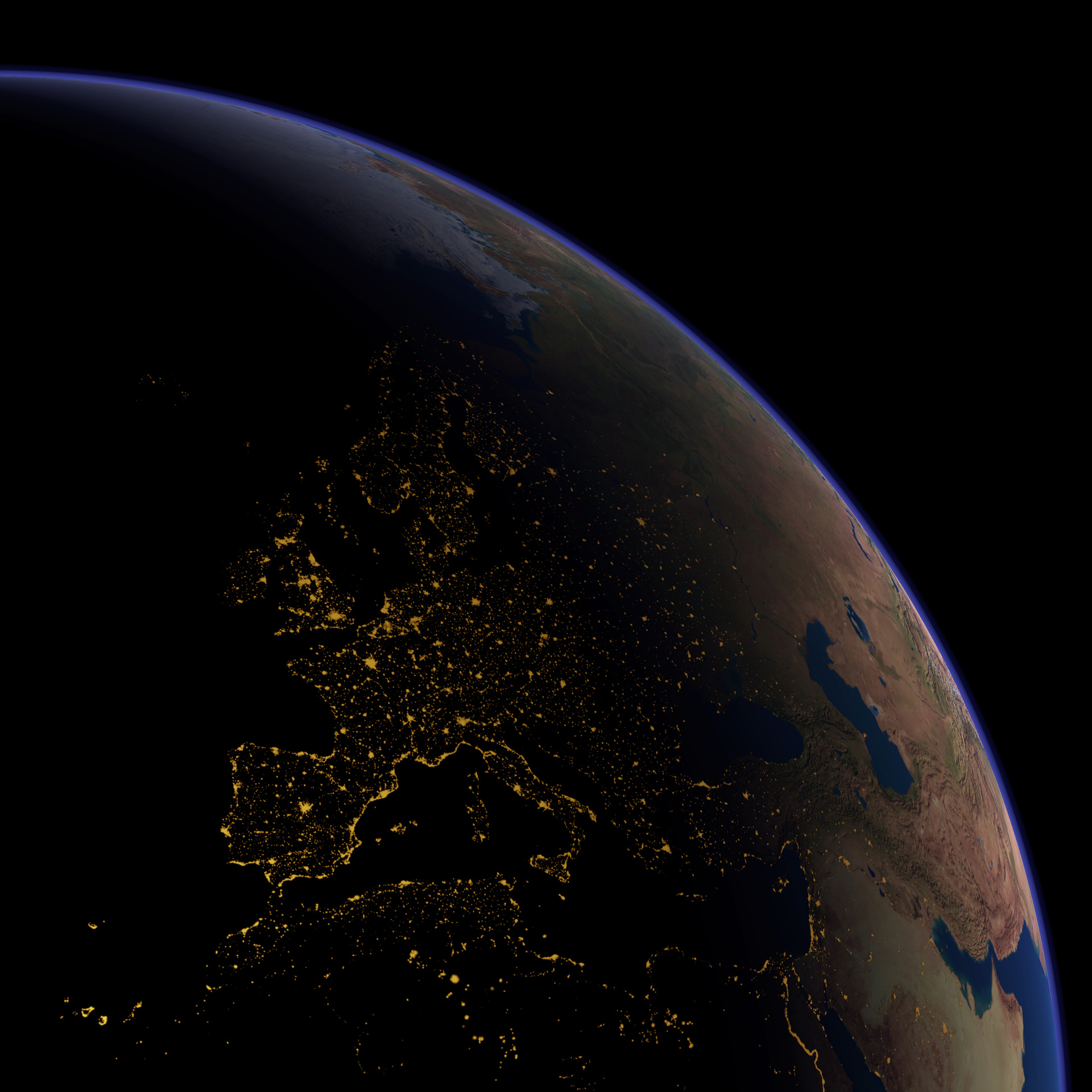
Europe at night

Great image of Europe and part of North Africa which gives a good indication of the population in that part of the world.

Imagen Línea A

Great picture of a coach of Línea A, the oldest subway line in Buenos Aires. It's nostalgic to actually ride it. Those who have done so know what i mean. Those who have not and go there try it! It's the light blue line which starts at Plaza de Mayo! It ends at this moment at Primera Junta and passes for example Plaza Miserere a nice big square to visit which also has the Cromagnon (disco fire) memorial.

Tango en Second Life

Argentina and Tango in Second Life. Did you know that Mayor elect of Buenos Aires Mauricio Macri is said to have gained votes through advertising in the game Second Life? Also look at Argentonia

I think i am going to take a look at that game soon!

"My Second Life"

Well this movie is not mine but for those who know the game Second Life (not me) it may be interesting :) Gives an idea of the world that exists there.

"In January 2007, a man named Molotov Alva, disapeared from his Californian home.

Recently, a series of video dispatches by a Traveler of the same name have appeared within a popular online world called Second Life.

Filmmaker Douglas Gayeton came across these video dispatches and put them together into a documentary of seven episodes."

Buenos Aires: Prices taxi rides increase?

There could be an increase in the prices for taxi rides in Buenos Aires. Prices could rise up to 20%. For a tourist that may not be a problem but for people who live there and have to take a taxi regularly it's quite a burden.

I wonder if prices for the remisses will also increase. (A remis is a "private" taxi you can order which usually has a fixed price per distance and is much cheaper than a taxi.)

¿Taxis más caros? Podría haber un aumento del 20% en las tarifas

Worldclock and some extra data

This is a nice one. Not only the time but also: World population, deaths and causes, amount of produced oil and cars and much more!

domingo, 29 de julio de 2007

Deep Forest - Sweet Lullaby

One of my favorites :)


Here is some explanation from some folks

"Sasi sasi o to aro aro
O angi si nau boroi amu
Ni ma oe e fasi korona
Dolali dasa na, lao dai afuimae
Afuta guau mauri, Afuta wela inomae

Sasi sasi ae o angisi nau
Boroi nima oe e fasi koro na
Dolali dasa na, lao dai afuimae
Afuta guau mauri, Afuta wela inomae
Young brother, young brother you be quiet
Although you are crying to me
Your father has left us
He has gone to the place of the dead
Protect the head of the living, Protect the orphan child

Young brother, young brother hey? although you are crying to me
Your father has left us
He has gone to the place of the dead
Protect the head of the living, protect the orphan child
Interpreting the Song:

This interpretation and lyrics come from one very old lady, living in Fataleka (one of the Solomon Islands), as translated by her grandchildren. The song is said to be very old and hence the new generation does not understand every word.

The song is about a young child crying because he does not see his father with the family. In response his elder sister sung this song to comfort as well as tell him the reality, with an appeal for their deceased father to protect this child in the land of the living (local ancient belief is that the dead care for loved ones they left behind).

The old woman also said that the sample, if listened to carefully, used some words and sounds that were added to make it sound more melo. Expression of some words twice, as well pronounciation of most of the words are different from that of normal conversation. Eg. 'O' should be OE', Angiangi should be angisi. This is very common with local traditional songs.

Thanks to the people of the Solomon Islands for the lyrics, translation, and interpretation"

10th Planet: today 2 years ago

Today day in 2005 the 10th planet was found named Eris. However in 2006 Eris was together with Pluto and Ceres designated "Dwarf planet". From Pluto some may remember because they even petitioned to get it back to planet status. Eris is slightly bigger than Pluto and has a moon called Dysnomia.

More about Eris here

sábado, 28 de julio de 2007

Charlie Chaplin 3D Animation

For some diversion: Charlie searches for his fiancée in the universe of Steven Spielberg's films ("E.T.", "Indiana Jones" and "Jurassic Park").


Some new changes Interactive Map Buenos Aires

The Mapa Interactivo de la Ciudad de Buenos Aires which is basically a Google Earth like website has been updated from Beta 1.0 status to 1.5 status without the beta suffix. For example you can see also pictures from earlier times. At the start just double click on a neighborhood (barrio) and you zoom in quite substantially already on that area. Also it seems much quicker than it was.

The whole article en Español

List of changes en Español

"Thriller" inmates

Over 2 million views now. In case you have not seen it. It's original!

"1,500 plus CPDRC inmates of the Cebu Provincial Detention and Rehabilitation Center, Cebu, Philippines at practice! This is not the final routine, and definitely not a punishment! just a teaser."


In the second movie they do Radio Gaga from Queen


Statetris

If you like a game and ever tried Tetris, then try this one. Was not so easy he first time. took me more than 10 minutes! They should make one with Argentina!

Game fullscreen

viernes, 27 de julio de 2007

New Da Vinci code wreaks Web havoc

Otra vez?

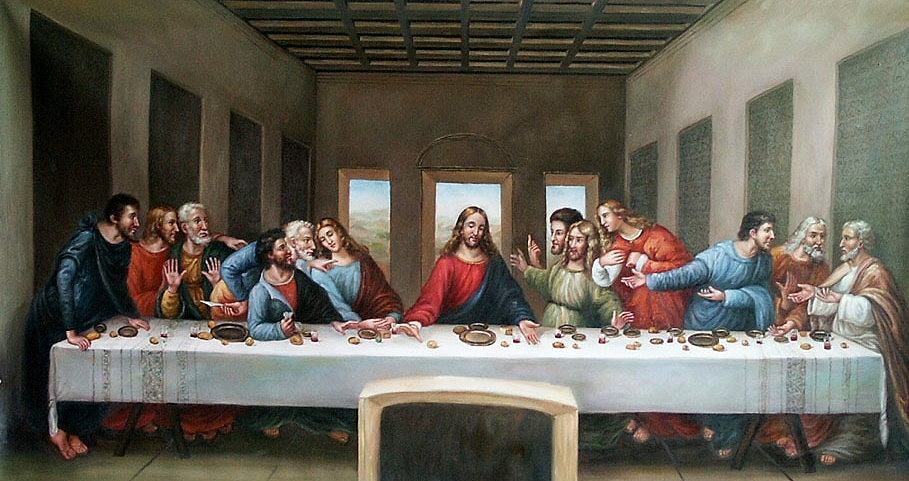
A new theory that Leonardo's "Last Supper" might hide within it a depiction of Christ blessing the bread and wine has triggered so much interest that Web sites connected to the picture have crashed.

The famous fresco is already the focus of mythical speculation after author Dan Brown based his "The Da Vinci Code" book around the painting, arguing in the novel that Jesus married his follower, Mary Magdelene, and fathered a child.

Now Slavisa Pesci, an information technologist and amateur scholar, says superimposing the "Last Supper" with its mirror-image throws up another picture containing a figure who looks like a Templar knight and another holding a small baby.

"I came across it by accident, from some of the details you can infer that we are not talking about chance but about a precise calculation," Pesci told journalists when he unveiled the theory earlier this week.

Websites www.leonardodavinci.tv, www.codicedavinci.tv, www.cenacolo.biz and www.leonardo2007.com had 15 million hits on Thursday morning alone, organizers said, adding they were trying to provide a more powerful server for the sites.

In the superimposed version, a figure on Christ's left appears to be cradling a baby in its arms, Pesci said, but he made no suggestion this could be Christ's child.

Judas, whose imminent betrayal of Christ is the force breaking the right-hand line of the original fresco, appears in an empty space on the left in the reverse image version.

And Pesci also suggests that the superimposed version shows a goblet before Christ and illustrates when Christ blessed bread and wine at a supper with his disciples for the first Eucharist.

The original Da Vinci depicts Christ when he predicts that one among them will betray him.

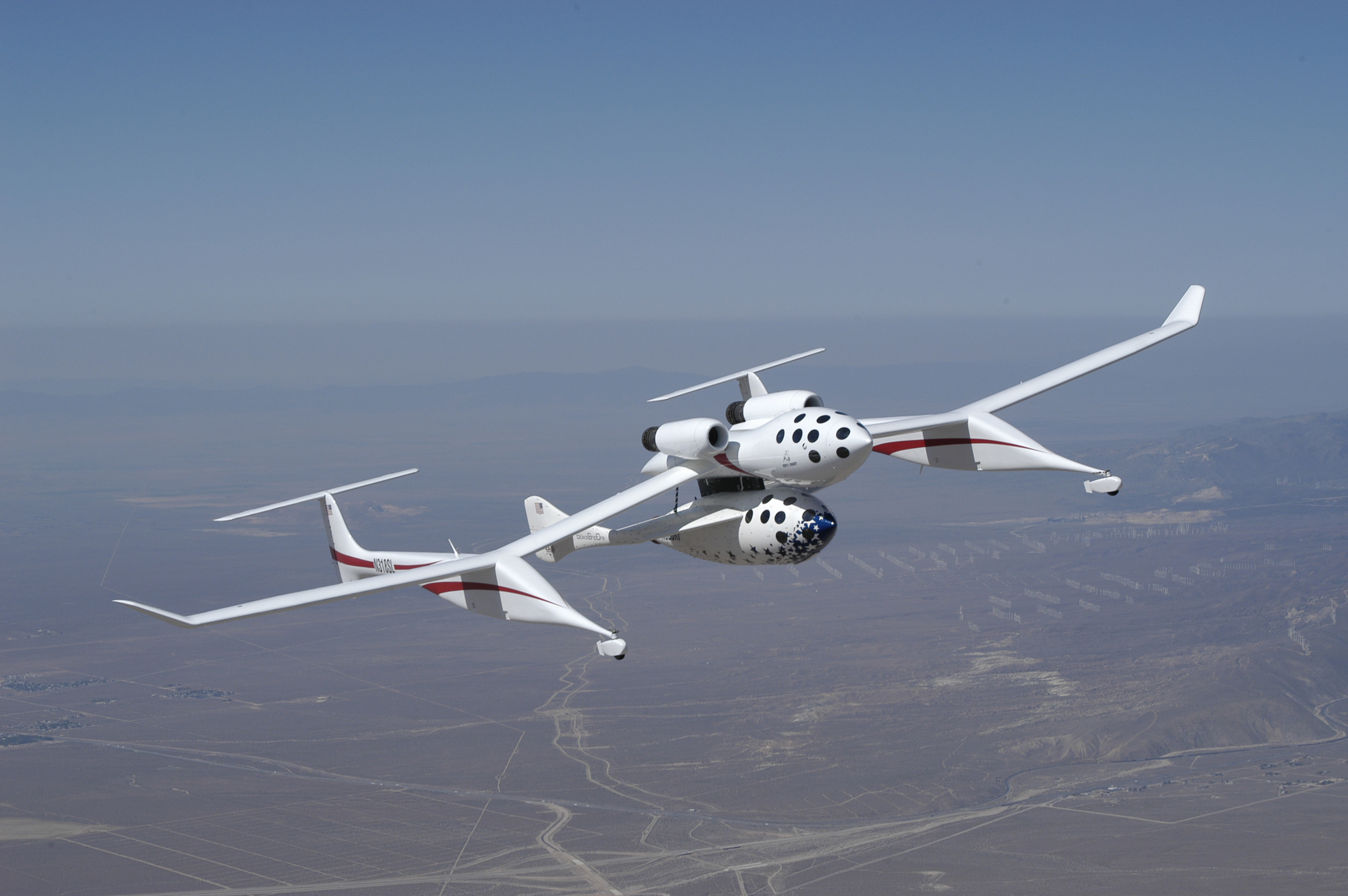
Northrop Grumman Buys Builder of SpaceShipOne

Northrop Grumman Corp. agreed July 5 to increase its stake in Scaled Composites - the builder of the Ansari X-Prize Cup-winning SpaceShipOne and a host of record-breaking aircraft - from 40 percent to 100 percent, Northrop Grumman spokesman Dan McClain confirmed July 20.

McClain, who declined to disclose the value of the deal, said the company expects it to close in August pending regulatory approval by the U.S. Department of Justice.

Scaled Composites currently is working with Sir Richard Branson's Virgin Galactic venture on a vehicle designated for now as SpaceShipTwo, which would carry two pilots and six paying passengers into suborbital space for a few minutes of weightlessness. The company also is building a new carrier aircraft, dubbed WhiteKnight2, that will carry SpaceShipTwo to an altitude of 15 kilometers before releasing it to soar to suborbital space.

The two companies last year formed a joint venture called the Spaceship Company to build the new vehicles.

Alex Tai, chief operating officer of Virgin Galactic, declined to comment when asked July 20 how the acquisition would affect his company's dealings with Scaled Composites. "I'm afraid I can't provide you with any comment at this stage and I don't think [Scaled Composites] can either," Tai said.

Scaled Composites, with the backing of Microsoft cofounder Paul Allen, won the $10 million Ansari X Prize in 2004 when SpaceShipOne was piloted to an altitude just above the internationally recognized border of space twice in a two-week period.

Preparing mate

Earlier i made posts about mate. Never showed how it's supposed to be made or prepared. So here is a video of someone who shows how it is done.

Weird Google Earth images Part 4 (final)

The last ones for now.

1. The unblinking eyes of the satellites record not only human achievements, but our less successful moments as well. One example is this huge ship (Google Earth coordinates 30.541634,47.825445) floating on its side after a maritime accident in the waters of Basrah, Iraq.

2. Sometimes Google Earth is lucky enough to catch things as they happen. Here Google Earth captures a truck that crashed (Google Earth coordinates 46.765669,-100.79274) outside of Bismarck, North Dakota.

3. Some of the sights you find in Google Earth are just plain mysterious. For example, why is a fighter jet parked (Google Earth coordinates 48.825183,2.1985795) in what looks to be a residential neighborhood lot near Paris?

Weird Google Earth images Part 3

1. Google's satellites sometimes catch the Earth's inhabitants on the move, like these ten African elephants (Google Earth coordinates 10.903497,19.93229).

2. Nothing can replace hopping in a plane and going somewhere, but Google Earth gives you a small taste of what you might see when you visit some of the world's tourist destinations. This spectacular shot shows Victoria Falls (Google Earth coordinates -17.925511,25.858223) on the border of Zambia and Zimbabwe.

3. Google Earth doesn't have advertising, unless you consider the corporate logos and trademarks big enough to be seen from space. This giant Ford logo (Google Earth coordinates 42.302284,-83.231215) is found near (where else?) Detroit, Michigan.


4. For aviation buffs, Google Earth offers the unique ability to spot airplanes in midair. One Google Earth Community has Placemarks for more than 3300 planes in flight, including this World War II bomber (Google Earth coordinates 52.336392,-0.1953462) flying over Huntingdon, England.

Egypt's fourth pyramid

Braving the heat waves that hit Egypt last week, Culture Minister Farouk Hosni embarked on his first field tour of the Grand Egyptian Museum (GEM) to inspect the progress on building the most ambitious archaeological museum ever planned.

More

Weird Google Earth images Part 2

1. If you're in the intelligence business, Google Earth makes hiding big things nearly impossible. This image is believed to be of a 1.8-square-mile scale model of a disputed region on the border of China and India. Google Earth spotters found it in a remote area in north central China (Google Earth coordinates 38.265652,105.9517). One theory on why this model exists comes from the Australian publication The Age, which reported that the scale model is used to train tank drivers.

2. Spend enough time on Google Earth, and you start thinking that the world is a pretty low-resolution place. But Google Earth is steadily updating its maps with high-resolution pictures. Zoom in on this Google Earth satellite shot of Australia's Bondi Beach (Google Earth coordinates -33.892351,151.27538), and you can almost read the designer labels on the bikinis.

3. National Geographic partnered with Google Earth on a project called Africa Megaflyover. The magazine has made more than 500 high-resolution images accessible through Google Earth, including this close-up view (Google Earth coordinates 15.298693,19.429661) of camels and their caretakers taking a water break in Nigeria.

4. Think parking is tough where you live? In Westenbergstraat, Netherlands, drivers apparently have to park on the sides of walls (Google Earth coordinates 52.069207,4.3139865).

FIA reveals 2008 Formula 1 calendar

The Australian Grand Prix will kick off the 2008 season, contrary to reports in recent weeks that Bahrain would get the nod for the curtain-raiser.

The FIA today unveiled the provisional schedule for next year with new events at Valencia and Singapore included on the calendar as expected, while the US no longer has an event following the failure of a new agreement between Formula One and the Indianapolis Motor Speedway.

Magny Cours remains on the schedule despite expectations earlier in the year that there would be no French event next year, before a return in 2009 at a possible new venue.

Suzuka officials had hoped that it would host the Japanese event next year after losing the race to Fuji this year, but Fuji again is included on the calendar.

2008 Formula One calendar

Mar 16 Australia (Melbourne)
Mar 23 Malaysia (Sepang)
Apr 6 Bahrain (Sakhir)
Apr 27 Spain (Barcelona)
May 11 Turkey (Istanbul)
May 25 Monaco (Monte Carlo)
Jun 8 Canada* (Montreal)
Jun 22 France (Magny Cours)
Jul 6 Britain (Silverstone)
Jul 20 Germany (Hockenheim)
Aug 3 Hungary (Hungaroring)
Aug 24 Europe (Valencia)**
Sep 7 Italy (Monza)
Sep 14 Belgium (Spa Francorchamps)
Sep 28 Singapore**
Oct 12 China (Shanghai)
Oct 19 Japan (Fuji)
Nov 2 Brazil (Interlagos)

* Provisional
** subject to circuit approval

Weird Google Earth images Part 1

There are some strange things to see on Google Earth. Here is part 1 of strange images. Later i will post more.

1. Dubbed The Badlands Guardian by locals, this geological marvel (Google Earth coordinates 50.010083,-110.113006) in Alberta, Canada, bears an uncanny resemblance to a human head wearing a full Native American headdress--and earphones, to boot. Of course, The Guardian was produced naturally.

2. Finding huge and unique things via Google Earth is one of the most popular activities within the Google Earth community. This giant pink bunny (Google Earth coordinates 44.244273,7.769737) in Prata Nevoso, Italy, was built by a group of artists from Vienna, according to published accounts. It's 200 feet long and answers to the name "Hare."


3. Without a doubt, the best thing that ever happened to crop circles is Google Earth. This circle in the desert just outside Beatty, Nevada (Google Earth coordinates 37.401437,-116.86773), is one of hundreds spotted with the software.

4. As if Oprah Winfrey's celebrity weren't big enough already, an Arizona farmer built a 10-acre homage to the talk show host (Google Earth coordinates 33.225488,-111.5955). Visitors can tell their friends, "I got lost inside Oprah's head."